
How Trust Is Evaluated for Pet Resorts Online
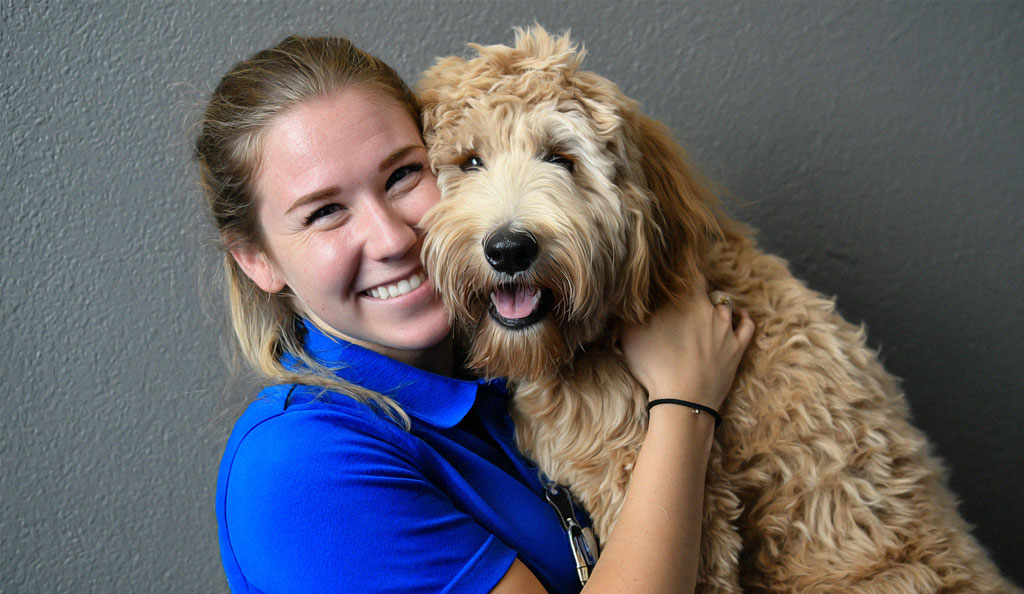
Pet Parents and AI Search Systems Decide Trust Before Contact Is Made
In Part 1 and Part 2 of this series, we explored how pet resort visibility has changed and why clarity is now essential once a pet parent reaches your website. But visibility and clarity alone do not determine who gets chosen.
This article, Part 3 of a 3-part series, examines how trust is evaluated for pet resorts in 2026 across Google and emerging AI-driven search platforms. It explains how reviews, staff visibility, consistency, and real-world signals are interpreted long before a phone call, tour request, or reservation ever occurs.
The goal is to make visible what is usually invisible: how trust is quietly assessed, accumulated, or undermined in modern pet resort search and decision-making.
In Part 1 of this series, we explored how visibility has changed as Google shifts toward AI-powered search results that intercept intent earlier in the process. In Part 2, we examined why clarity has become foundational once a pet parent reaches your website.
That leads to the final question.
Once a pet resort is visible and clearly understood, what actually determines which business is recommended by AI Search Systems?
In 2026, the answer is trust. And trust is evaluated long before a phone call, tour request, or reservation ever happens.
Trust Is the Final Filter in AI-Driven Search Decisions
Pet parents do not begin their search by contacting multiple facilities and asking basic questions. By the time they reach out, most of the evaluation has already taken place.
Google remains the primary driver of local discovery, but it is no longer the only environment where decisions are shaped. AI-driven search platforms, including Google’s AI-powered search results, ChatGPT, Perplexity, and others, are increasingly used to interpret intent, summarize options, and reduce uncertainty.
These systems are not judging character. They are assessing risk.
Their role is to surface businesses that appear reliable, consistent, and low-risk based on information they can confidently explain and corroborate across sources. Pet parents are doing the same thing, often without realizing it.
Trust is not formed at the moment of contact.
It is inferred earlier, quietly, and cumulatively.
Reviews Are Evaluated as Evidence, Not Opinions
Reviews have always mattered. What has changed is how they are interpreted across modern AI-driven search systems.
Google and other AI-powered platforms no longer treat reviews as simple star averages. They analyze them as behavioral evidence, looking for patterns that suggest reliability, professionalism, and care quality over time.
These systems pay attention to:
- Recurring themes across reviews
- Emotional tone and sentiment
- Consistency of praise or concern
- How issues are acknowledged and addressed
- Whether responses reflect accountability
Pet parents do this instinctively.
A smaller number of detailed, specific reviews describing supervision, communication, safety, and professionalism often feels more trustworthy than a large volume of generic praise. The narrative matters more than the score.
Trust is built through consistency, not perfection.
Review Responses Reveal How a Business Actually Operates
When we talk about review responses as a trust signal, what we are really talking about is operational maturity.
Pet parents are not evaluating tone for politeness. They are asking a quieter question: If something goes wrong with my dog, how will this be handled?
Across years of reviewing pet resort websites and business profiles, we’ve seen that responses often reveal more than service pages ever could.
Clear, measured responses suggest:
- Active leadership and oversight
- Standards that extend beyond marketing language
- Accountability without defensiveness
Silence or erratic tone introduces uncertainty. AI-driven search systems interpret these patterns at scale, just as pet parents do individually.
In 2026, review responses are not a courtesy. They are evidence.
Staff Visibility Turns Abstract Trust Into Something Concrete
Pet resorts operate in a high-trust category. Care is delivered by people, not systems.
When staff information is vague or absent, trust becomes abstract. Pet parents are forced to imagine who is caring for their dog, and uncertainty fills the gap.
Clear staff visibility reduces that uncertainty immediately.
It helps pet parents understand:
- Who is responsible for daily care
- What experience exists behind the operation
- Whether leadership appears present and stable
AI-driven search platforms rely on the same information. Staff pages, leadership bios, and role clarity provide concrete signals of experience and expertise that can be explained consistently across platforms.
These are not cosmetic pages. They are credibility infrastructure.
Consistency Is How Trust Compounds Over Time
Trust rarely breaks because of a single issue. It erodes through small inconsistencies that accumulate quietly.
Through long-term audits, we repeatedly see trust weakened when:
- Services are described differently across platforms
- Policies shift subtly between pages
- Tone changes without intention
- Claims are made in one place and unsupported in another
Pet parents may not articulate these mismatches, but they feel them. AI search systems detect them algorithmically.
Consistency communicates something simple but powerful: this business understands itself and operates deliberately.
Why Generic Claims No Longer Carry Weight
Many pet resort websites rely on familiar phrases:
- “We treat every pet like family.”
- “We love dogs.”
- “Exceptional care.”
- “Recommended by local veterinarians”
These statements are well intentioned, but they are not evidence.
In an AI-driven search environment, unverifiable claims do not strengthen trust. They are ignored.
What builds confidence now are explanations that show:
- How care is delivered day to day
- What experience looks like in practice
- How standards are maintained
- How decisions are made when something goes wrong
Both pet parents and AI-driven search systems are looking for proof, not positioning.
What This Series Is Really About
Pet resort digital marketing in 2026 is no longer about maximizing exposure on a single platform.
It is about being consistently and confidently understood across multiple AI-driven search environments.
Google still leads local discovery. Other AI platforms increasingly influence evaluation, comparison, and reassurance. All of them rely on the same core inputs.
- Visibility determines whether your business is considered.
- Clarity determines whether it is understood.
- Trust determines whether it is chosen.
These are not separate tactics. They are parts of a single system.
Pet resorts that struggle in 2026 will not struggle because they ignored SEO. They will struggle because they treated SEO as a channel instead of a credibility framework.
Those that succeed will be the ones whose digital presence allows both pet parents and AI-driven search systems, regardless of platform, to reach the same conclusion:
This is a business I can trust.
Ready to Understand What This Means for Your Business?
The digital marketing landscape for pet resorts has fundamentally changed. Let’s discuss how these shifts impact your specific market and what strategic adjustments can strengthen your visibility and credibility.
